Matru Gaya: the tirtha for one’s mother
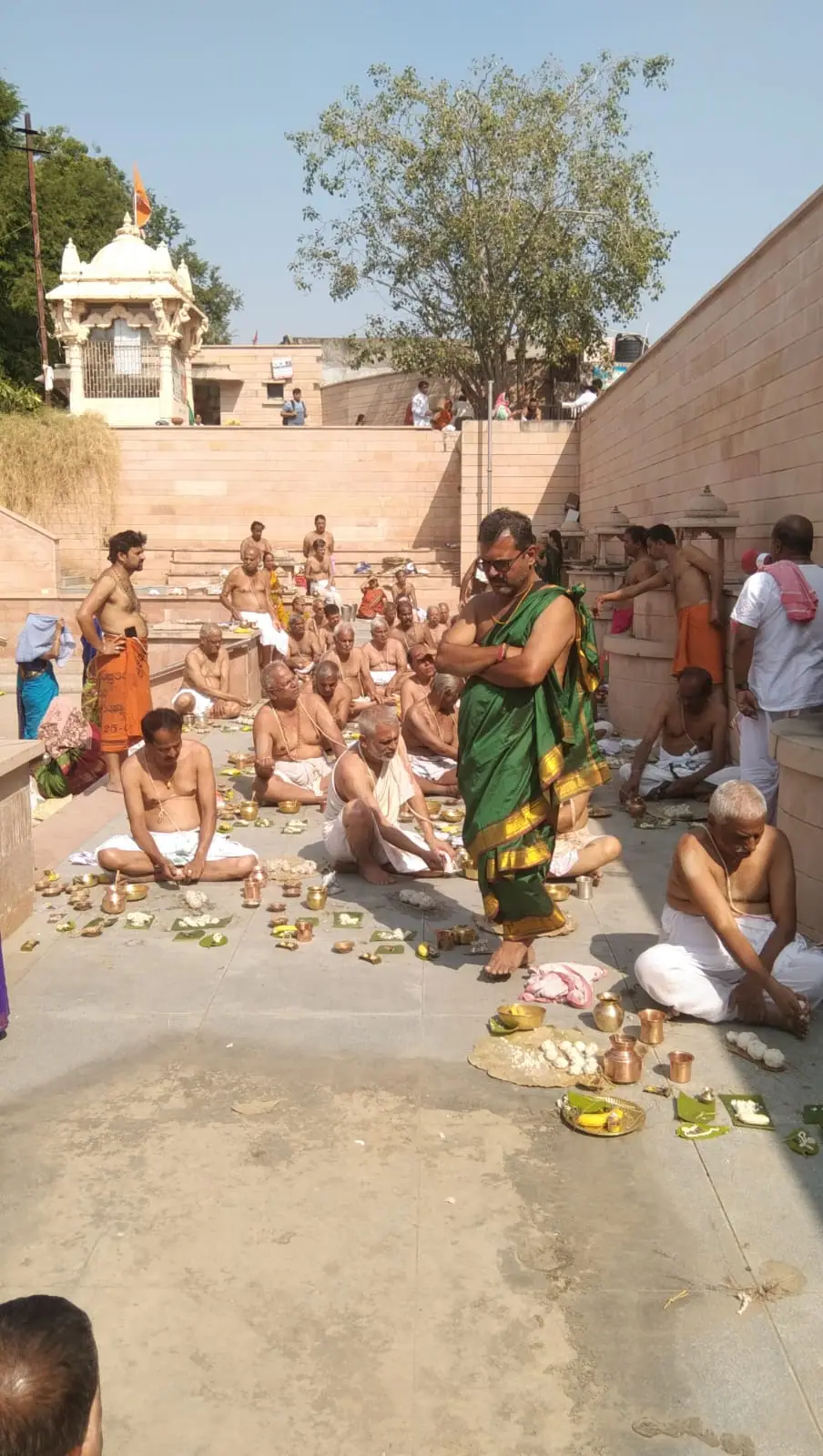
Just as Gaya in Bihar is the chief tirtha for shraddha for one’s father and paternal ancestors, Siddhpur is revered as the tirtha for shraddha for one’s mother. Gujarat Tourism describes Siddhpur as having “the importance of Matru Gaya”, and the Patan district administration lists Bindu Sarovar as the Matru Tarpan place of Siddhpur.
In Hindu thought, a mother’s care creates a debt (matru rin) that cannot be repaid in full. Offering shraddha for her at Siddhpur is regarded as the most fitting way to honour that debt.
Bindu Sarovar in the Srimad Bhagavatam
The third canto of the Srimad Bhagavatam (chapters 21–33) tells of Sage Kardama, his wife Devahuti and their son, Lord Kapila. It places Kardama’s hermitage on the bank of Bindu-sarovara, a lake on the Sarasvati, named for the drops (bindu) of tears the Lord shed there out of compassion (SB 3.21.38–39).
After Kardama renounced the world, Kapila stayed on at Bindu Sarovar “to please His mother” (SB 3.25.5) and taught her the path of devotion and Sankhya. The place where Devahuti attained perfection is called Siddhapada (SB 3.33.31).
The Bhagavatam does not name the modern town. That this Bindu Sarovar is the sacred tank at Siddhpur is a long-standing tradition of the region.
Lord Kapila
In the Bhagavad Gita, Krishna says, “among perfected beings I am the sage Kapila” — siddhanam kapilo munih (Gita 10.26).
The Bhagavatam relates that after teaching his mother, Kapila travelled north-east, where the ocean offered him a place to dwell (SB 3.33.34). Tradition identifies that place with Gangasagar, where the Ganga meets the sea; the Gangasagar Mela at the Kapil Muni temple is held every Makar Sankranti, around 14 January.
Parashurama’s shraddha for his mother
Siddhpur also preserves the tradition that Parashurama performed shraddha for his mother, Renuka, at Bindu Sarovar — one more reason the tirtha is associated with rites for the mother. A Parashurama temple stands in the precinct.
The five sacred lakes (Panch Sarovar)
Hindu tradition reveres five sacred lakes. Gujarat Tourism counts Bindu Sarovar among them:
- Mansarovar, in the Himalaya
- Pushkar Sarovar, Rajasthan
- Bindu Sarovar, Siddhpur, Gujarat
- Narayan Sarovar, Kutch, Gujarat
- Pampa Sarovar, near Hampi, Karnataka
The Bindu Sarovar precinct today
According to Gujarat Tourism, the rites take place at the Kapilamuni Ashram precinct, which has three sacred kunds — Gyan Vapika, Alpa Sarovar and Bindu Sarovar.
The state government has developed the precinct substantially, with major works from around 2012 including ritual halls, bathing facilities and seating. The Shristhal Sangrahalay museum beside the sarovar opened in 2017. In 2024 the Gujarat Pavitra Yatradham Vikas Board reported that around 47,100 families had performed Matru Shraddha here in the previous year, with space for about 200 families at a time, changing rooms, drinking water and e-rickshaws for elderly pilgrims (Loktej).
Siddhpur beyond the sarovar
Siddhpur stands on the Sarasvati river in Patan district. Its best-known monument is the Rudra Mahalaya, a great Shiva temple completed in the twelfth century under the Chaulukya king Jayasimha Siddharaja. Only parts survive today; it is protected by the Archaeological Survey of India. The town is also known for the ornate havelis of its Bohra quarter.
Every year from Kartik Ekadashi to Kartik Purnima, Siddhpur hosts its traditional fair, and pilgrim numbers for Matru Shraddha peak in Kartik, Bhadrapad and Chaitra.
The purohit tradition
Siddhpur’s tirth purohits have long kept family registers — pothi or chopda — that record the visits and lineages of the families they serve. ETV Bharat reported in 2021 that registers kept by the Audichya Sahastra Gor Mandal are centuries old and still intact.
Punarapi jananam punarapi maranam, punarapi janani jathare shayanam — “again birth, again death, again lying in a mother’s womb.”
These lines from Adi Shankaracharya’s Bhaja Govindam reflect on the cycle of birth and death — and on the mother through whom each life begins.
Sources
Scripture is quoted from the cited texts. Points marked Tradition reflect beliefs and local practice that are widely held but cannot be independently verified. Points marked History are drawn from the sources below.
- Srimad Bhagavatam, Canto 3 (Vedabase)
- Bhagavad Gita 10.26 (Vedabase)
- Gujarat Tourism — Sidhpur
- Patan district administration — Bindu Sarovar, Matru Tarpan place
- Loktej (24 Sep 2024) — Siddhpur, a historic pilgrimage site for Matru Shradh
- Wikipedia — Shristhal Sangrahalay (Bindu Sarovar museum)
- Wikipedia — Rudra Mahalaya Temple
- ETV Bharat Gujarati (6 Oct 2021) — Siddhpur’s genealogy registers
- Wikipedia — Gangasagar Mela