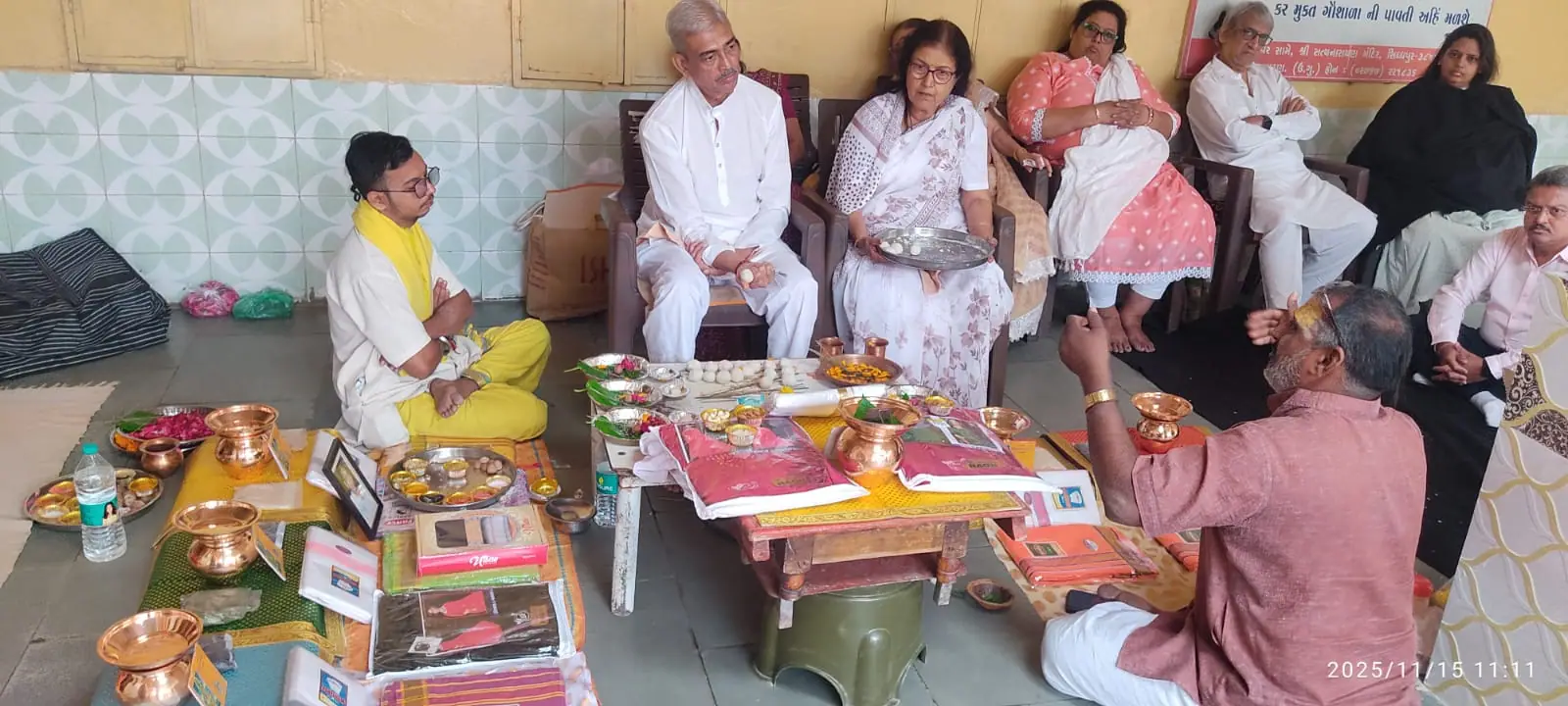
What is Matrugaya Pooja?
Matrugaya Pooja is the shraddha offered specifically for one’s mother. In Hindu tradition, a mother’s care and sacrifice create a debt (matru rin) that a child can never fully repay; offering shraddha at Siddhpur is regarded as the most sacred way to honour her and pray for her peace.
The rite brings together the essential acts of every shraddha — the sankalp, tarpan (offering of water) and pinda daan (offering of pindas) — performed for the mother, at the place tradition holds most fitting for it.
Why Siddhpur and Bindu Sarovar?
Siddhpur is revered as Matru Gaya — just as Gaya in Bihar is the chief tirtha for shraddha for one’s father, Siddhpur is the tirtha for shraddha for one’s mother.
The Srimad Bhagavatam (Canto 3) describes Bindu Sarovar, on the Sarasvati, as the hermitage of Sage Kardama and his wife Devahuti, and the place where their son, Lord Kapila, taught his mother the path to liberation. By long tradition this Bindu Sarovar is identified with the sacred tank at Siddhpur. Gujarat Tourism also records the tradition that Parashurama performed shraddha for his mother here.
Read more about the significance of Bindu Sarovar →
Who can perform Matrugaya Pooja?
It is performed for a mother who has passed away, most often by her son or daughter. Daughters, married or unmarried, do perform it at Siddhpur.
Questions about other relatives — for example a grandchild performing it for a grandmother, or a husband for his wife — are answered differently in different families and communities. Rather than rely on a general web page (including this one), tell the purohit your situation; they will explain what your family tradition allows.
When should it be performed?
Matrugaya Pooja can be arranged through most of the year. Many families choose a date after the first death anniversary, or a day with personal or religious significance such as the tithi of the mother’s passing.
- Busiest months: Kartik, Bhadrapad and Chaitra. Siddhpur’s traditional fair runs from Kartik Ekadashi to Kartik Purnima, when the town is especially crowded.
- Pitru Paksha — the fortnight dedicated to ancestors — is also a popular time for shraddha.
- Book early for these periods, and allow for crowds and slower movement around the precinct.
What happens during the rite
The purohit leads you through each step and explains it as it happens. The exact sequence varies with family tradition and the rites you have chosen; this is the usual outline.